
Table of contents:
- Material: what lies beneath the surface?
- Finish: where craft and mass production part ways
- Durability: an investment for decades against a replacement after a season
- An example: HEXAGO wood acoustic panels
- When is premium worth it, and when will mass-market do?
- Don’t take our word for it. See for yourself.
Premium vs Mass-Market Wall Panels: Material, Finish and Durability
Two architects. One project. Two walls.
The first chooses panels from a building supplier. Price: [CONVERT — see note] per m². Delivery: a week. Installation: simple.
The second chooses premium wood wall panels. Price: [CONVERT — see note] per m². Delivery: a month. Installation: demands precision.
After a year, one wall needs replacing. The other looks better than it did on installation day.
Care to guess which is which?
The problem is not that mass-market panels are bad. The problem is that nobody says out loud what actually separates them, beyond the price. And the difference has nothing to do with a logo, the packaging or the marketing.
The difference lies in three things you cannot see in a photograph, but feel after three months of use: material, finish, durability.
Material: what lies beneath the surface?
Mass-market panels: MDF plus veneer, an imitation of wood
The construction of a typical panel from a builder’s merchant:
- core: MDF,
- face layer: veneer or a print imitating wood,
- finish: acrylic lacquer, machine sprayed.
Why it works, for a while
MDF is cheap, easy to machine and dimensionally stable (it never moves the way wood does). Veneer gives the impression of wood at first glance. Lacquer protects the surface.
Why it stops working
Veneer peels after a few years, particularly in places exposed to moisture, touch or mechanical damage. The MDF beneath the veneer is not wood. It is compressed dust. When the veneer cracks, it exposes a grey mass with nothing to do with beauty.
Acrylic lacquer creates a barrier between a person and the material. You touch plastic, not wood. No scent, no warmth, no authenticity.
Premium panels: solid wood, an authenticity that matures
The construction of FORM AT WOOD wood wall panels:
- core: technical plywood,
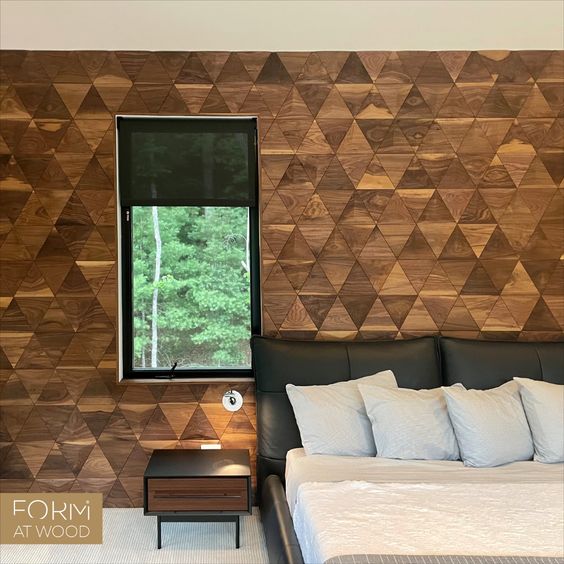
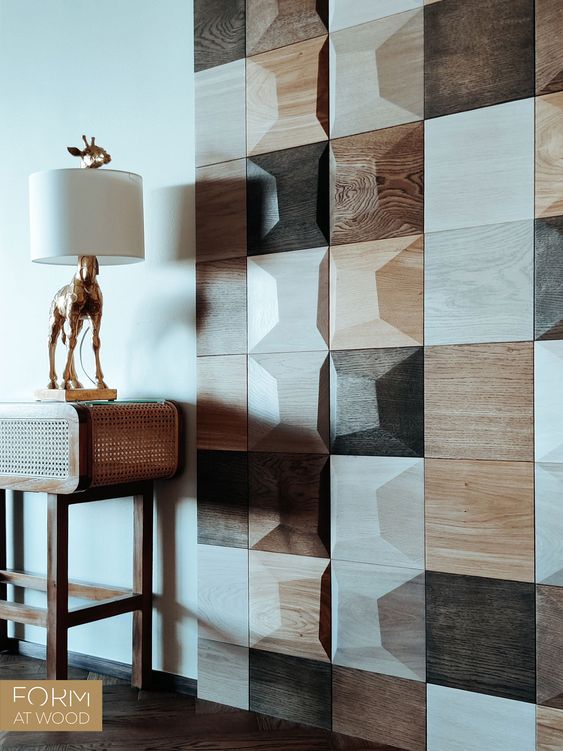
- face layer: solid fine hardwood (oak, ash, American walnut),
- finish: hardwax oil or premium lacquer (applied by hand, in multiple layers).
Why it works, for decades
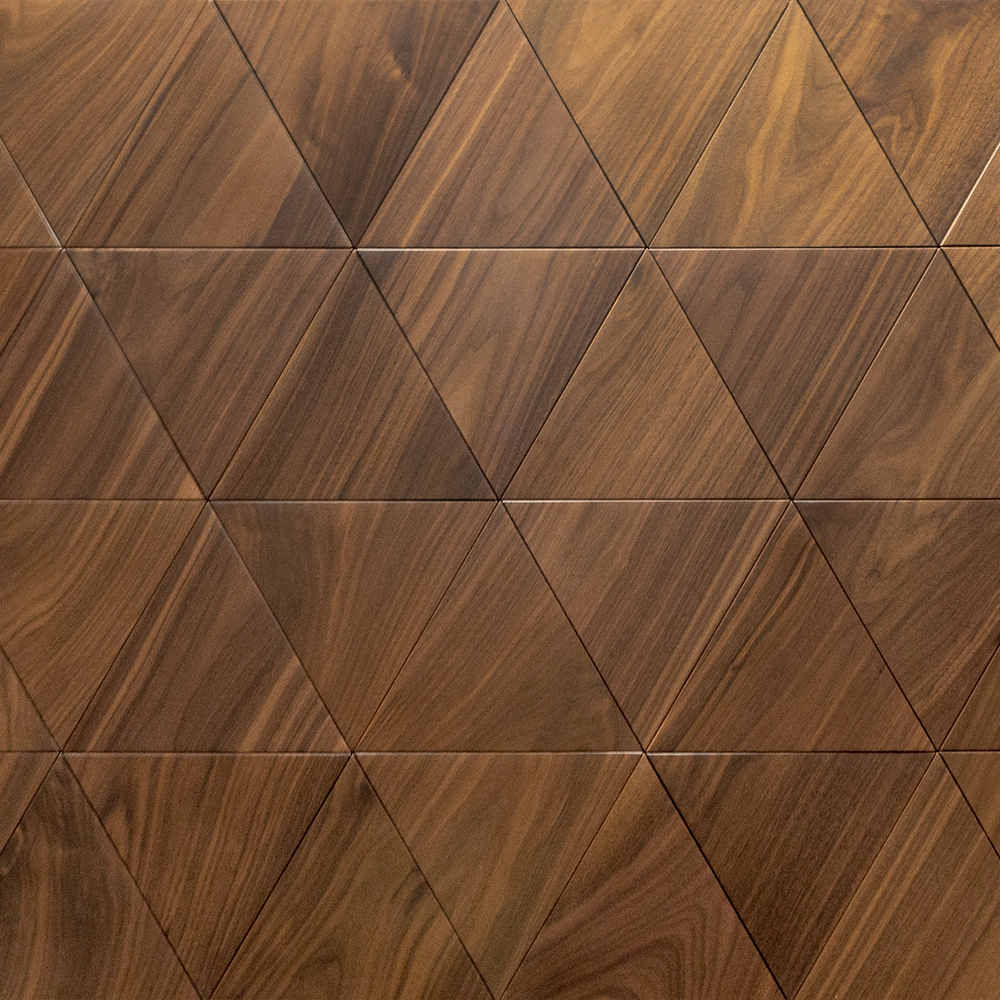
Solid wood is no imitation. It is an authentic material with visible grain, pores and structure. Every panel is different, because every tree is different.
The technical plywood beneath provides stability, so the wood never cracks or deforms under changing humidity. But the face layer, the one you touch and see, is 100% natural wood.
A hardwax oil finish lets the wood breathe. It creates no plastic barrier. You feel the warmth, the structure, the scent. The wood is alive.
Why it matures with time
Solid wood never ages the way veneer does, peeling and losing color. Solid wood gains patina: a deeper tone, character, history. In 10, 20, 30 years, the panel looks better than it did on installation day.
Finish: where craft and mass production part ways
Mass-market panels: acrylic lacquer, a barrier between you and the material
Acrylic lacquer applied by machine (spraying, dipping) creates a uniform, smooth coating. Fast, cheap, repeatable.
The problem
Lacquer is plastic. You touch it and feel cold, smoothness, an absence of life. There is no scent of wood, because the lacquer seals it in. There is no warmth, because you are touching a synthetic coating rather than a natural material.
After a few years of use, lacquer cracks in the places exposed to mechanical damage: corners, edges, the surfaces touched most often. It cannot be renewed. The whole panel has to be replaced.
Premium panels: hardwax oil, wood that breathes
Hardwax oil applied by hand, in layers, with drying time between applications. This is no coating. It is an impregnation that penetrates the structure of the wood.
Why it matters
You touch wood, not plastic. You feel the warmth of the material, its structure, the fine irregularities that are proof of authenticity rather than a flaw. The subtle scent of wood remains, particularly after a fresh installation.
The wood can breathe. It regulates the humidity of a room and responds to changes in temperature, without cracking or deforming, thanks to the layered construction with its technical plywood core.
Renewal
In 15 to 20 years, a panel can be sanded back and a fresh layer of wax applied, and the panel looks new. Nothing needs replacing. This is an investment for decades, not for a season.
Premium RAL lacquer: control without a loss of quality
For projects that demand precise color control (matching a brand palette, coherence with other elements of an interior), FORM AT WOOD offers premium lacquer in the RAL palette.
The difference between premium and mass-market lacquer
- multi-layer application (hand applications with drying time, rather than spraying),
- oil-based lacquer rather than acrylic: more flexible, no cracking under temperature changes,
- a matte finish rather than gloss: it never masks the structure of the wood, it emphasizes it.
The result: control of color with the authenticity of the material intact.
Durability: an investment for decades against a replacement after a season
Mass-market panels: 5 to 7 years of service (optimistically)
What happens after a few years
- veneer peels in places exposed to moisture (bathrooms, kitchens) or mechanical damage (corridors, commercial spaces),
- colors fade under sunlight, particularly in rooms with large windows,
- lacquer cracks at corners and edges,
- the MDF beneath the veneer swells if moisture reaches it, for instance through cracks in the lacquer.
The result: Replacing the panels, or accepting that the wall looks worse than it did on installation day.
Premium panels: 20 to 30 years and beyond, a material that matures
What happens after a few decades
- solid wood gains patina (a deeper tone, more noble grain),
- a wax finish can be renewed (sanding plus a fresh layer of wax makes the panel new again),
- the layered construction (plywood and solid wood) stays stable, with no cracking or deformation,
- the grain of the wood never fades, because it is the natural structure of the material rather than a print.
The result: A wall that looks better in 20 years than it does today. It asks for no replacement. It asks for respect.
An example: HEXAGO wood acoustic panels
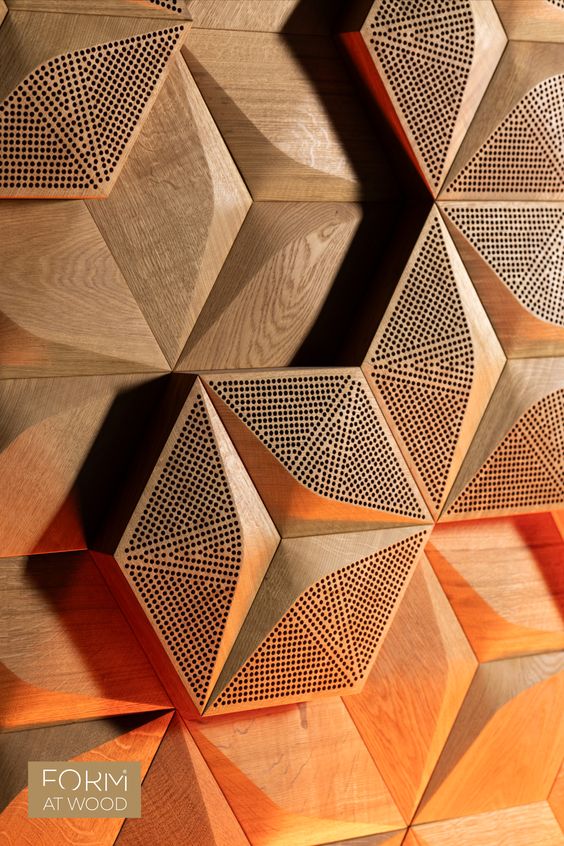
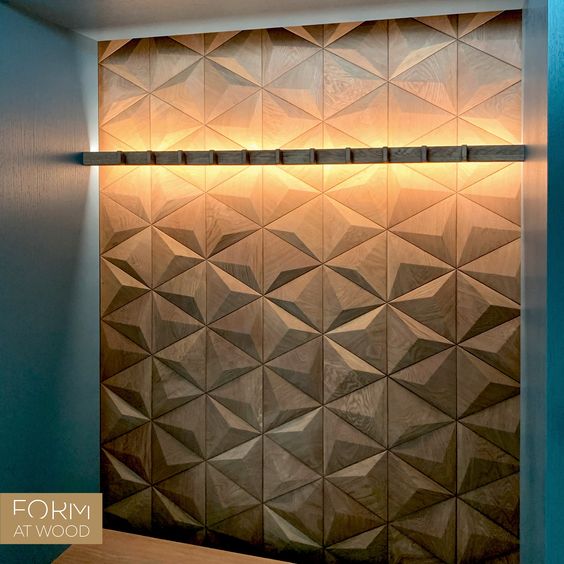
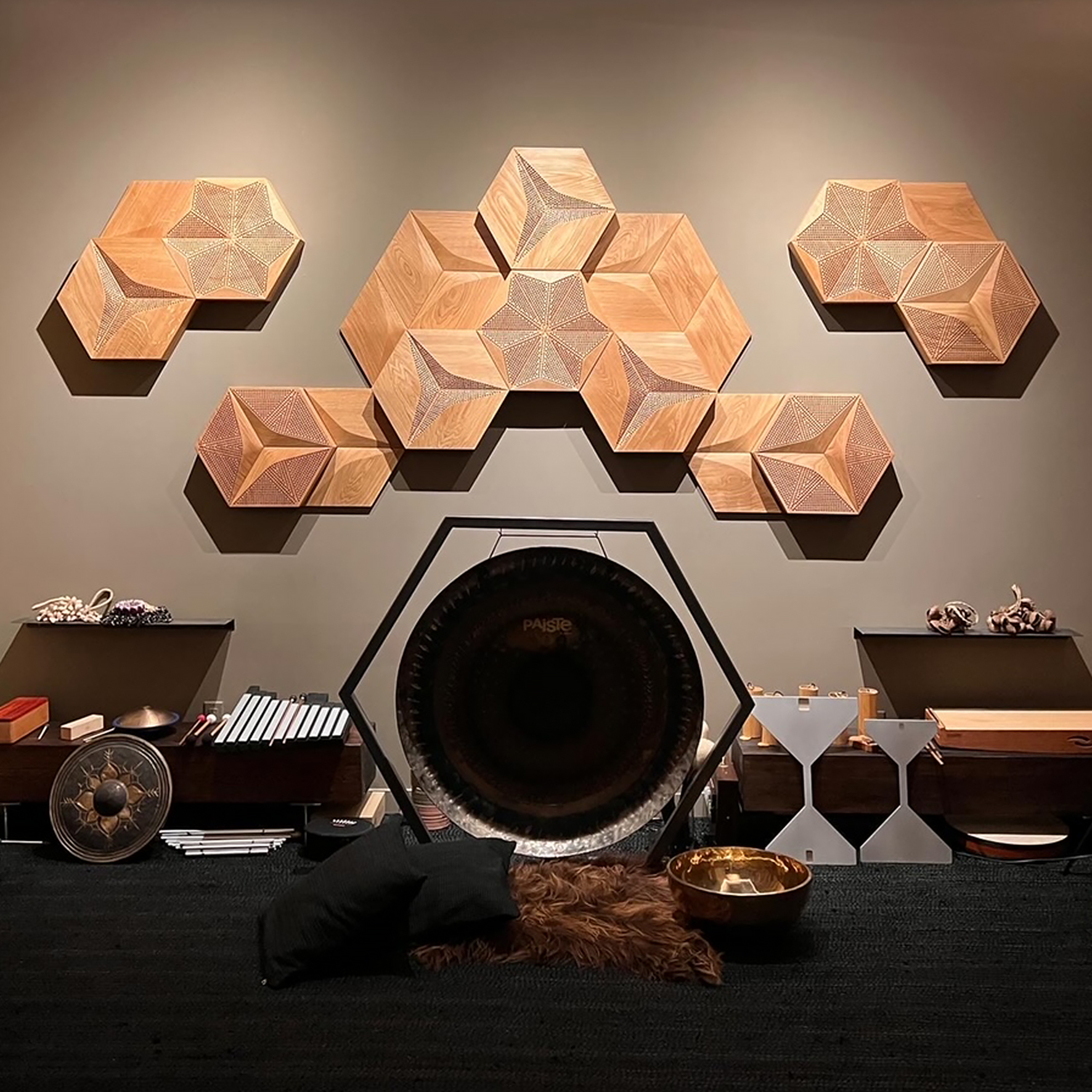
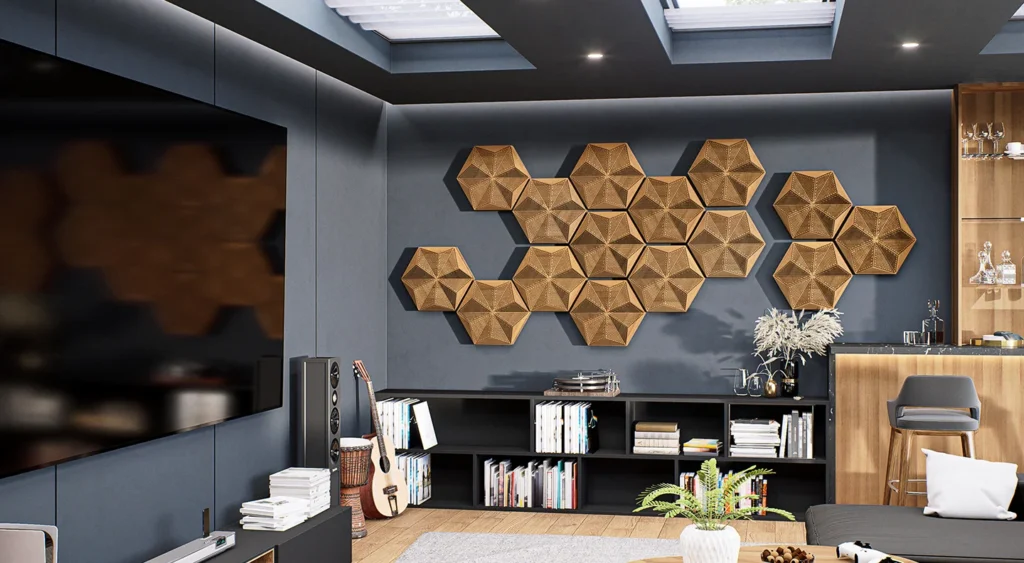
The HEXAGO collection, acoustic panels created in collaboration with AGH University in Kraków, is a clear example of the difference between a premium and a mass-market approach to a product.
Mass-market acoustic panels
- acoustic layer: polyurethane foam (cheap, but it loses its properties over a few years),
- surface: a print imitating wood, or fabric (not wood),
- effectiveness: uncertified, based on the manufacturer’s claims.
HEXAGO acoustic panels
- acoustic layer: a specialist sound-absorbing material (verified with AGH University in Kraków, absorption class A or D),
- surface: solid wood with perforation (an authentic material plus acoustic function),
- effectiveness: confirmed by sound absorption curves, laboratory testing and technical documentation.
The result: acoustics that work for decades, and beauty that never passes with a trend.
When is premium worth it, and when will mass-market do?
Choose mass-market panels if:
- you are designing a temporary space (pop-up store, exhibition, set design),
- the budget is tight and speed of delivery is the priority,
- the space will be replaced within a few years (a startup office planning a move, for example).
Choose premium panels if:
- you are designing a representative space (hotel lobby, company reception, private residence),
- you want the wall to look better in 10 years than it does today,
- your client values the authenticity of a material over an imitation,
- the space requires certification (WELL, BREEAM, LEED), where natural materials contribute points.
Don’t take our word for it. See for yourself.
The difference between premium and mass-market panels is felt, never seen in a photograph.
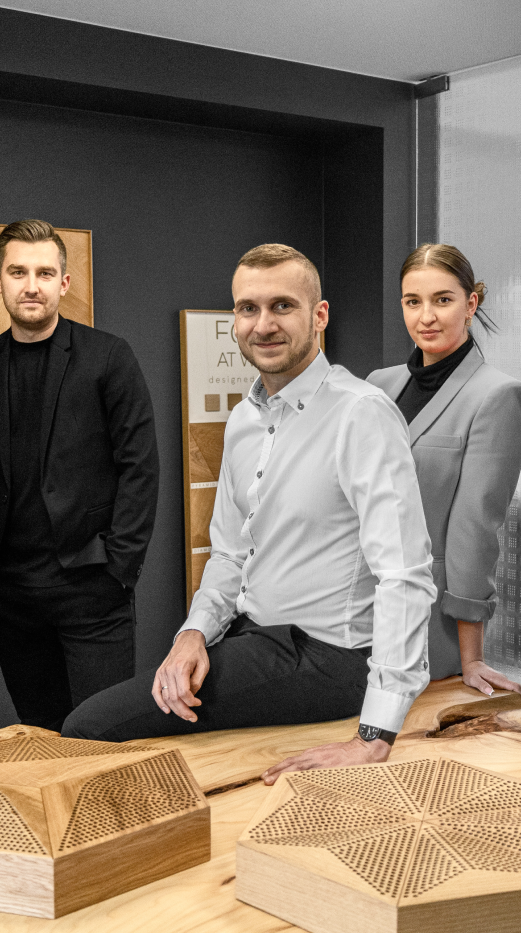
Order samples: solid wood (oak, ash, walnut) with a wax finish. Lay them beside a panel from a builder’s merchant. Touch both. Compare the weight, the scent, the warmth.
This is no cost. It is time with the material before a decision that will last for decades.
If you are designing a space that deserves more than an imitation, get in touch. We will help you choose a solution that outlasts more than a season.